We develop human-relevant 3D organoid disease models for drug testing applications, contributing to efforts to find cures for diseases such as high-risk neuroblastoma, a pediatric cancer with a low survival rate that primarily affects children under 5 years of age.
OUR SOLUTION
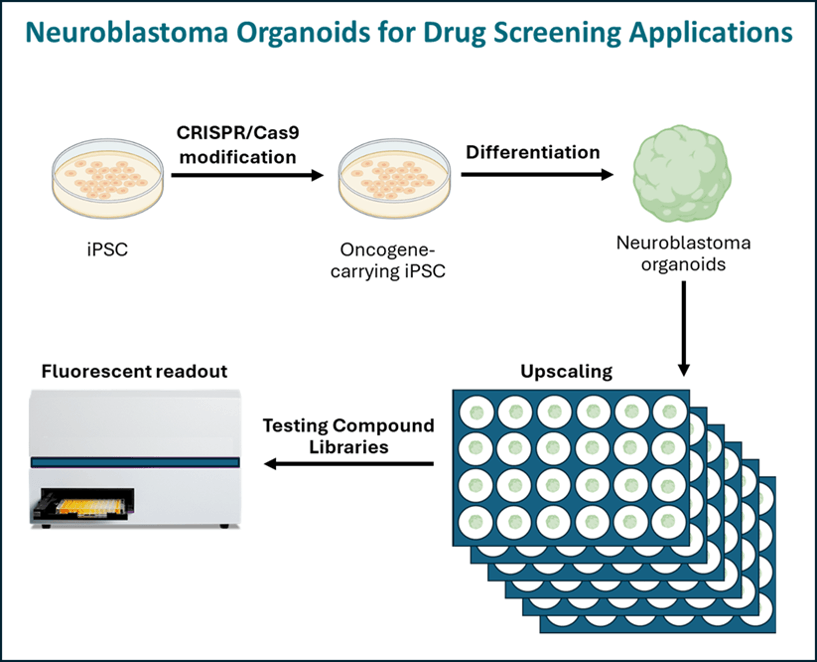
Our in vitro method enables the generation of high-risk neuroblastoma organoids from genetically modified induced pluripotent stem cells.
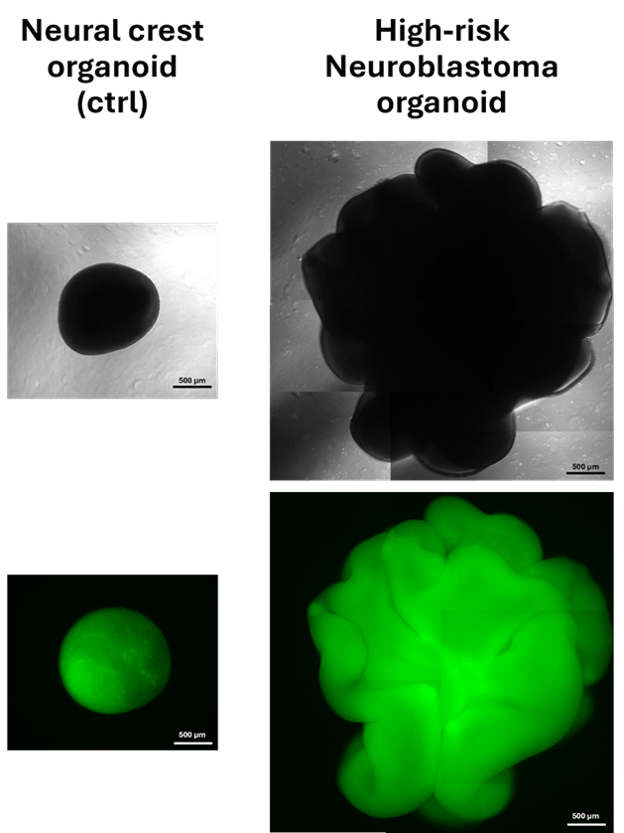
We have developed a neural crest organoid model containing cell types representative of neuroblastoma. By inducing the expression of a transgene responsible for high-risk neuroblastoma in a subset of these relevant cell types, we create a unique system that allows simultaneous observation of healthy and tumorigenic cells, as well as the investigation of their interactions.
Brightfield and fluorescent images of Day 60 organoids
BENEFITS
Includes cell types relevant to high-risk neuroblastoma
Incorporates healthy cells as a microenvironment
Provides human-specific responses in a tumor-like 3D structure when exposed to drugs
APPLICATIONS
High-throughput screening of compound libraries
Medium-throughput target evaluation
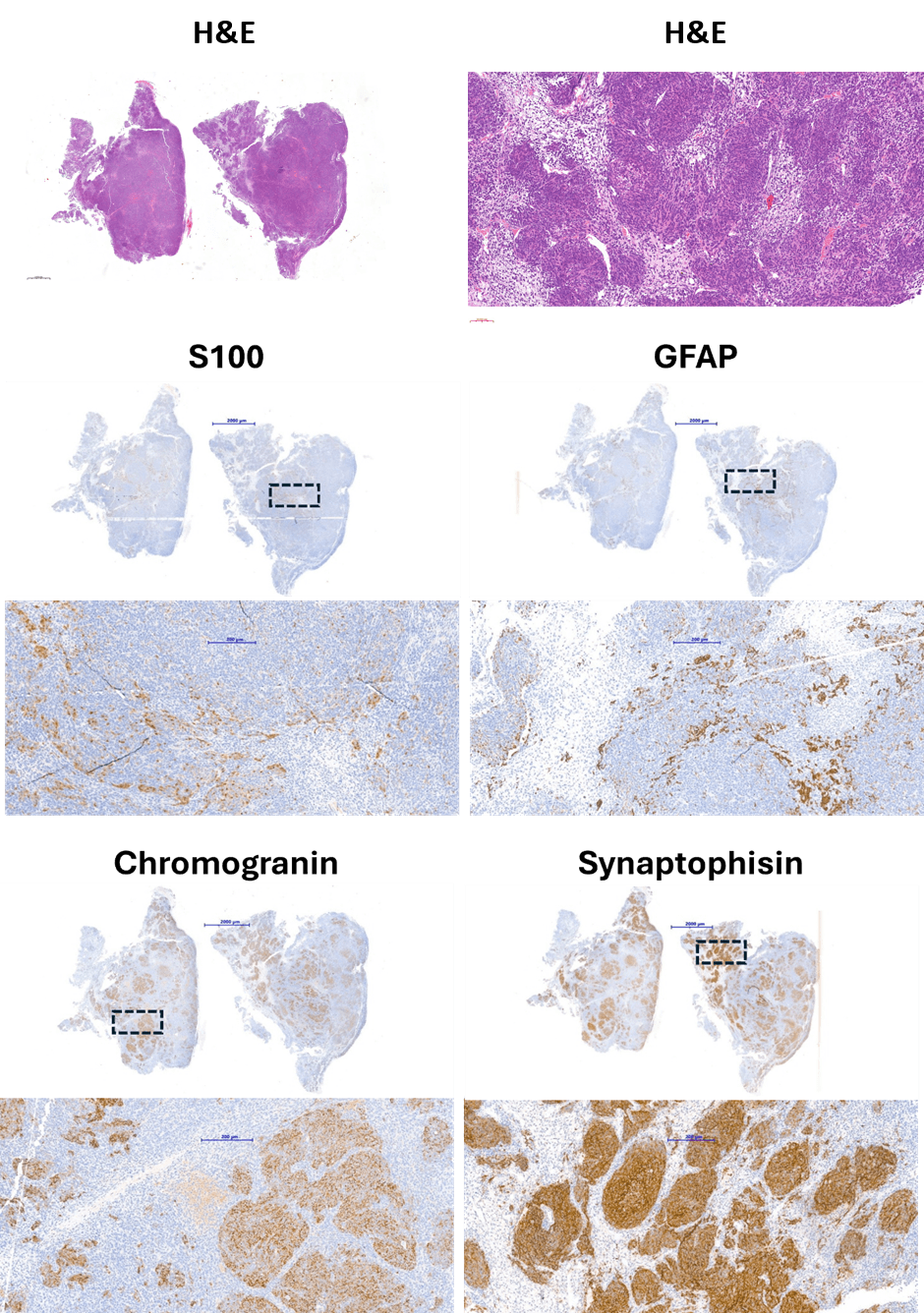
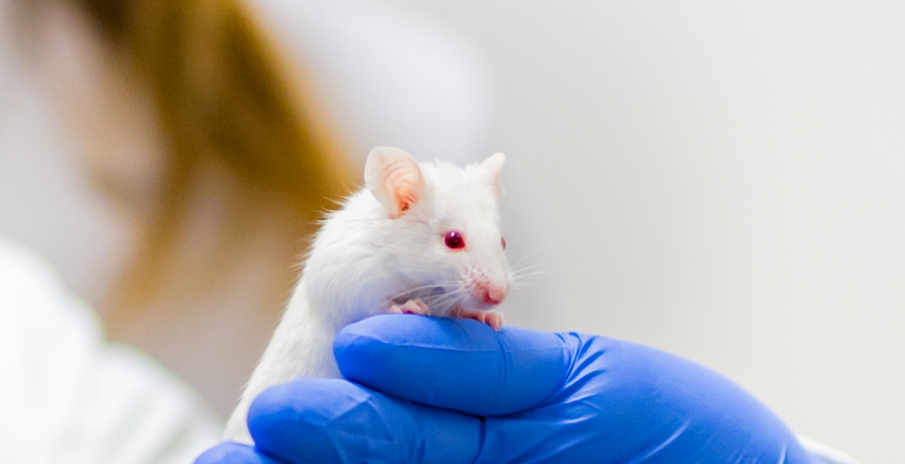
Neuroblastoma organoids subcutaneous implantation into immunodeficient mice
First-Generation Xenograft Neuroblastoma Organoids: Histology and Marker Expression
Xenograft neuroblastoma organoids express low levels of S100 and GFAP, and high levels of tumor markers Synaptophysin and Chromogranin, indicating a less differentiated and more aggressive phenotype consistent with high-risk disease.
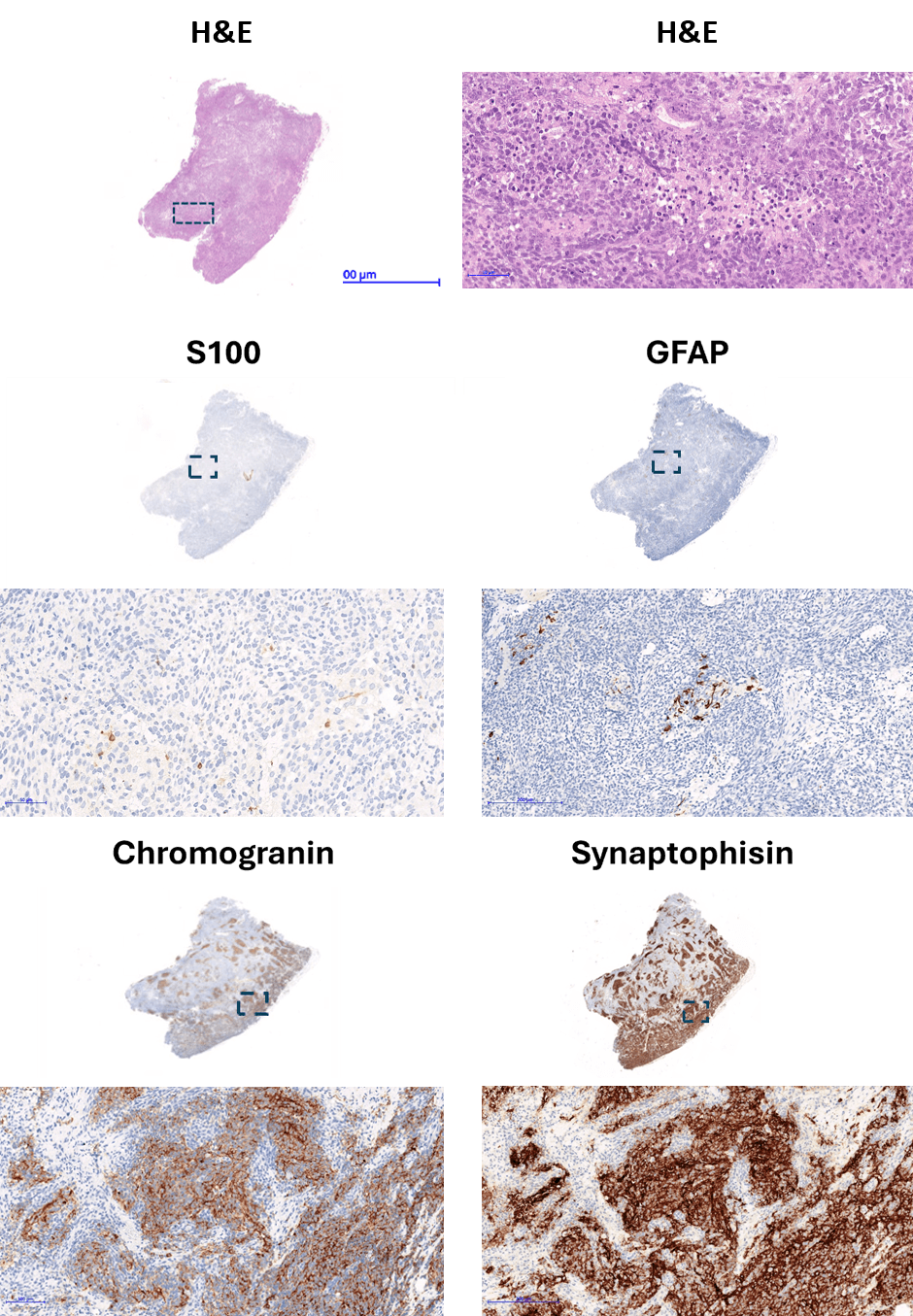
Second-Generation Xenograft Neuroblastoma Organoids: Histology and Marker Expression
Xenograft neuroblastoma re-transplanted subcutaneously into immunodeficient mice from tumors established in first-generation xenograft neuroblastoma organoids. Tumor cells express low levels of S100 and GFAP, while Chromogranin and Synaptophysin are expressed at high levels, consistent with the first generation. These results confirm a stable, less differentiated and more aggressive phenotype characteristic of high-risk disease.
TECHNOLOGY STATUS
TRL 3–4: Technology validated in the laboratory
partnership
We are seeking partners interested in testing compound libraries against novel, human-specific targets for high-risk neuroblastoma.
For further details regarding neuroblastoma model, please contact us on in**@*******ab.hu